How to Bury an Anarchist is at once a work of philosophy, a history, a memoir, and a practical end-of-life field guide.
Four years in the making, the book follows parallel deathcare across history and into the present: the ways individuals, lovers, chosen families, anarchists, queer communities, mutual-aid societies, and small circles have cared for their dead alongside, beyond, and sometimes in direct conflict with institutional authority.
Moving through hospitals, homes, forests, cemeteries, clandestine graves, family burial grounds, political funerals, archives, and private arrangements between people who have chosen one another, How to Bury an Anarchist examines what happens when intimacy, bodily sovereignty, law, and institutional custody cease to align.
Its historical terrain includes home vigils and household deathcare, mutual-aid burial societies, funeral cooperatives, queer burial grounds, forest and conservation burial, clandestine and unmarked graves, political funerals, contested bodies, anti-memorial practices, and deliberate disappearance. Joe Hill, Buenaventura Durruti, Sylvia Rivera, ACT UP’s Ashes Action, OWL Farm, Truganini, Safea Jamil Deeb, Collectif Les Morts de la Rue, Tejana mutualistas, queer lovers buried together, and many others move through its pages.
A substantial part of the book is concerned with queer and trans deathcare, chosen family, estranged or hostile kin, and the mechanisms that determine who is recognized when someone dies. Body custody, medical authority, healthcare proxies, funeral instructions, wills, hospital advocacy, transport, identity after death, and the movement of bodies across jurisdictions are considered alongside the more difficult question beneath them: who acquires authority over a person once that person can no longer answer?
Chosen death is addressed directly through authorship, witness, refusal, bodily sovereignty, clandestinity, entrusted letters and knowledge, intervention and non-intervention, and the limits of what a person may ask another to carry after their death.
The practical field guide moves from documents to bodies themselves: home vigils, washing and dressing the dead, shrouds and coffins, carrying a body, digging a grave, natural and forest burial, conservation burial, human composting, aquamation, cremation, body donation, family burial grounds, unmarked burial, and the practical arrangements through which a person can exert greater authorship over their own end.
Running through these histories and mechanisms is a philosophical inquiry into possession: who owns a body, a grave, a story, a memory, a secret, or a final wish; what love permits; what should remain private; what the dead may ask of the living; and whether disappearance itself can be allowed to remain complete.
Memoir enters throughout, from Saint-Cirq-Lapopie and the author’s earliest encounters with death as an ordinary part of life, through later experiences caring for bodies, accompanying the dying and those who love them, and running a forest burial ground.
This edition includes:
• Eleven chapters spanning parallel deathcare, funerary history, bodily sovereignty, queer and trans deathcare, chosen family, clandestine burial, chosen death, disappearance, memory, and the limits of possession
• Practical material on body custody, healthcare proxies, funeral authority, end-of-life documents, home vigils, caring for and carrying the dead, burial, and alternative forms of disposition
• Extensive Notes on Sources and a full index
• Access with each copy to the book’s private companion portal, containing materials for creating personal end-of-life plans and resources maintained separately as laws, procedures, and institutional practices change
To bury without permission is sometimes illegal. So are many forms of disappearance, secrecy, bodily autonomy, and unauthorized care once institutional authority loses its monopoly over the dead.
PRE-ORDER. This first hardcover printing is now entering production. Orders placed during the production period will help determine the size of the initial, limited edition print run. Expected to begin shipping September 15, 2026.
How to Bury an Anarchist is at once a work of philosophy, a history, a memoir, and a practical end-of-life field guide.
Four years in the making, the book follows parallel deathcare across history and into the present: the ways individuals, lovers, chosen families, anarchists, queer communities, mutual-aid societies, and small circles have cared for their dead alongside, beyond, and sometimes in direct conflict with institutional authority.
Moving through hospitals, homes, forests, cemeteries, clandestine graves, family burial grounds, political funerals, archives, and private arrangements between people who have chosen one another, How to Bury an Anarchist examines what happens when intimacy, bodily sovereignty, law, and institutional custody cease to align.
Its historical terrain includes home vigils and household deathcare, mutual-aid burial societies, funeral cooperatives, queer burial grounds, forest and conservation burial, clandestine and unmarked graves, political funerals, contested bodies, anti-memorial practices, and deliberate disappearance. Joe Hill, Buenaventura Durruti, Sylvia Rivera, ACT UP’s Ashes Action, OWL Farm, Truganini, Safea Jamil Deeb, Collectif Les Morts de la Rue, Tejana mutualistas, queer lovers buried together, and many others move through its pages.
A substantial part of the book is concerned with queer and trans deathcare, chosen family, estranged or hostile kin, and the mechanisms that determine who is recognized when someone dies. Body custody, medical authority, healthcare proxies, funeral instructions, wills, hospital advocacy, transport, identity after death, and the movement of bodies across jurisdictions are considered alongside the more difficult question beneath them: who acquires authority over a person once that person can no longer answer?
Chosen death is addressed directly through authorship, witness, refusal, bodily sovereignty, clandestinity, entrusted letters and knowledge, intervention and non-intervention, and the limits of what a person may ask another to carry after their death.
The practical field guide moves from documents to bodies themselves: home vigils, washing and dressing the dead, shrouds and coffins, carrying a body, digging a grave, natural and forest burial, conservation burial, human composting, aquamation, cremation, body donation, family burial grounds, unmarked burial, and the practical arrangements through which a person can exert greater authorship over their own end.
Running through these histories and mechanisms is a philosophical inquiry into possession: who owns a body, a grave, a story, a memory, a secret, or a final wish; what love permits; what should remain private; what the dead may ask of the living; and whether disappearance itself can be allowed to remain complete.
Memoir enters throughout, from Saint-Cirq-Lapopie and the author’s earliest encounters with death as an ordinary part of life, through later experiences caring for bodies, accompanying the dying and those who love them, and running a forest burial ground.
This edition includes:
• Eleven chapters spanning parallel deathcare, funerary history, bodily sovereignty, queer and trans deathcare, chosen family, clandestine burial, chosen death, disappearance, memory, and the limits of possession
• Practical material on body custody, healthcare proxies, funeral authority, end-of-life documents, home vigils, caring for and carrying the dead, burial, and alternative forms of disposition
• Extensive Notes on Sources and a full index
• Access with each copy to the book’s private companion portal, containing materials for creating personal end-of-life plans and resources maintained separately as laws, procedures, and institutional practices change
To bury without permission is sometimes illegal. So are many forms of disappearance, secrecy, bodily autonomy, and unauthorized care once institutional authority loses its monopoly over the dead.
PRE-ORDER. This first hardcover printing is now entering production. Orders placed during the production period will help determine the size of the initial, limited edition print run. Expected to begin shipping September 15, 2026.
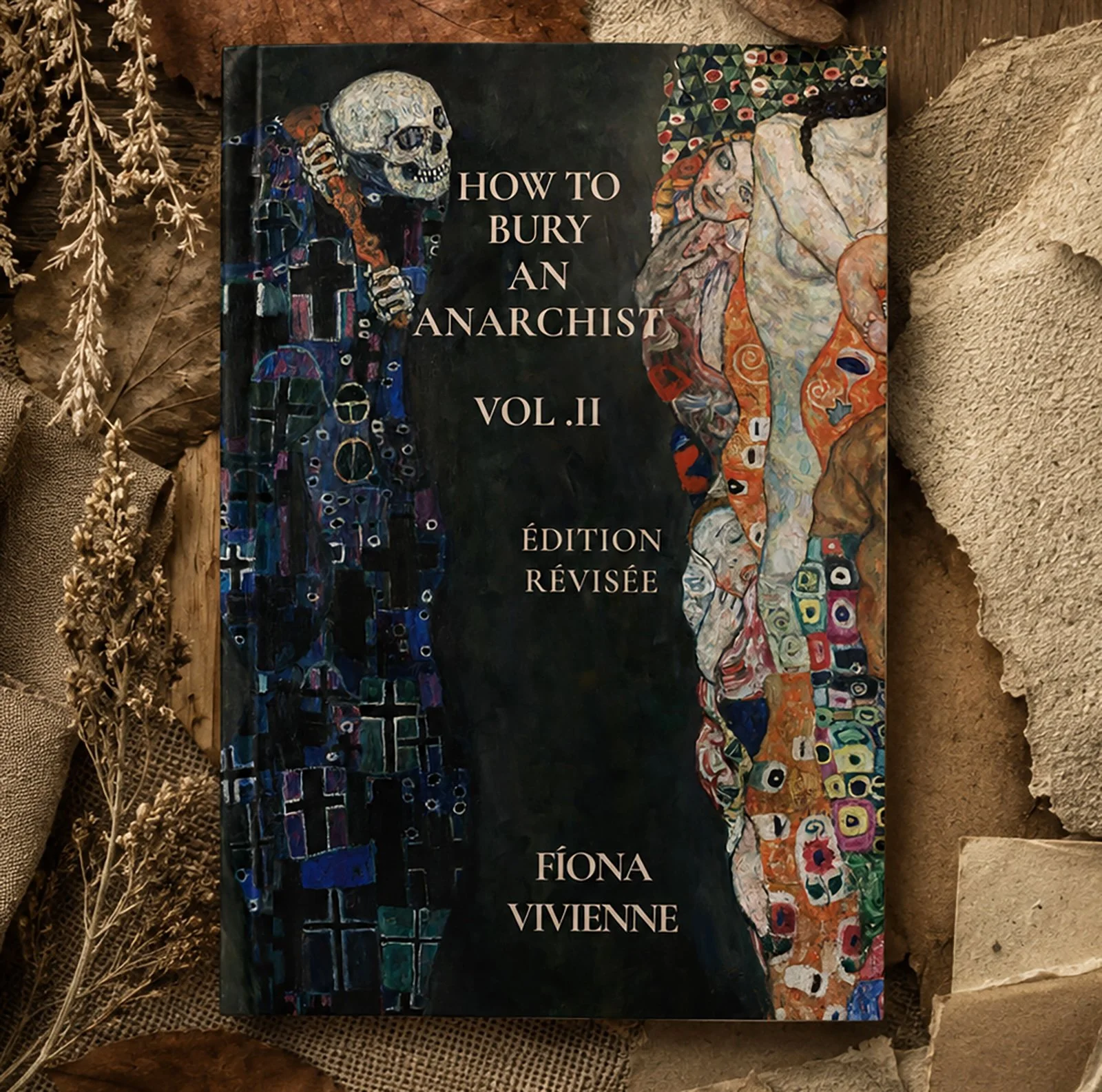 Image 1 of 9
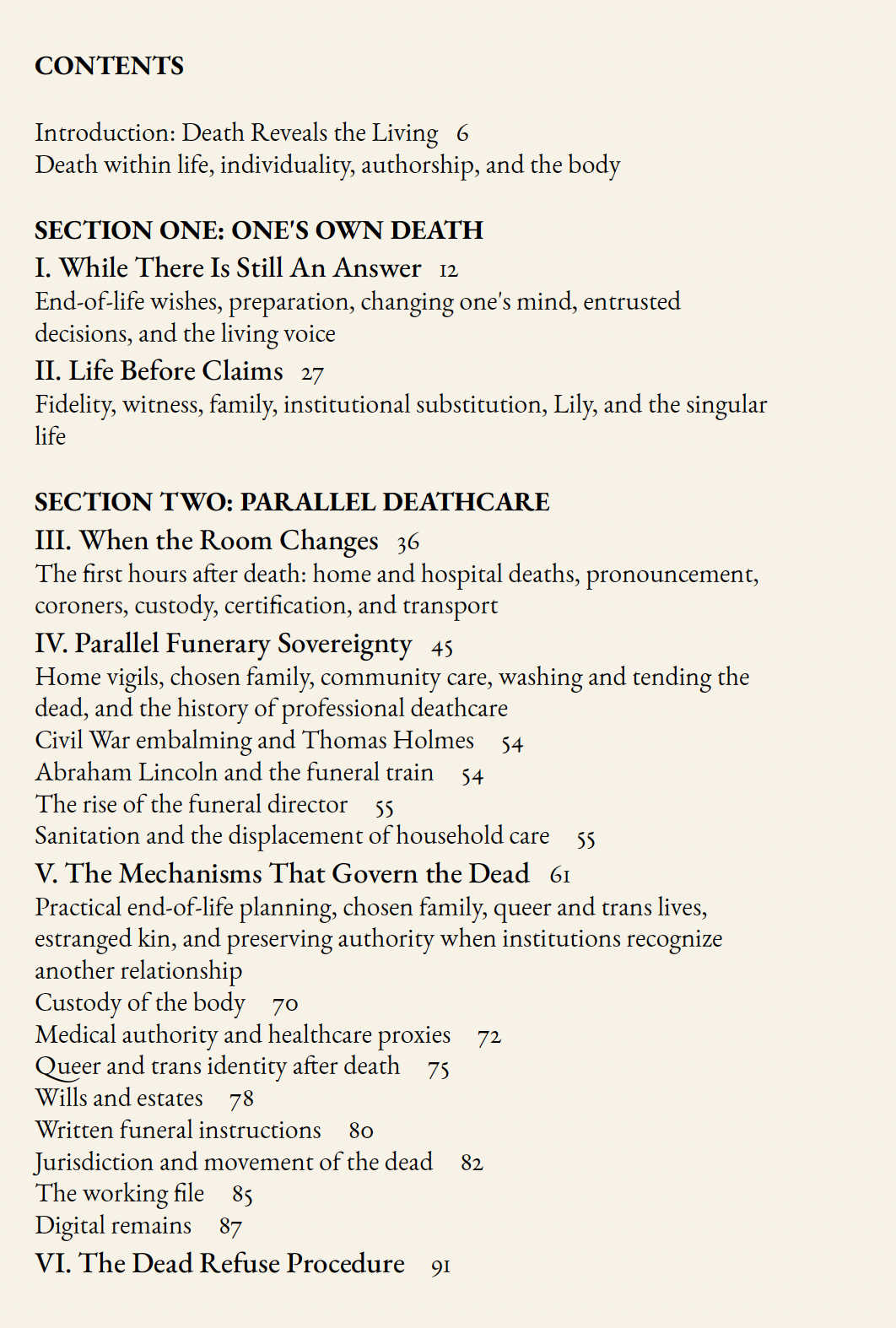 Image 2 of 9
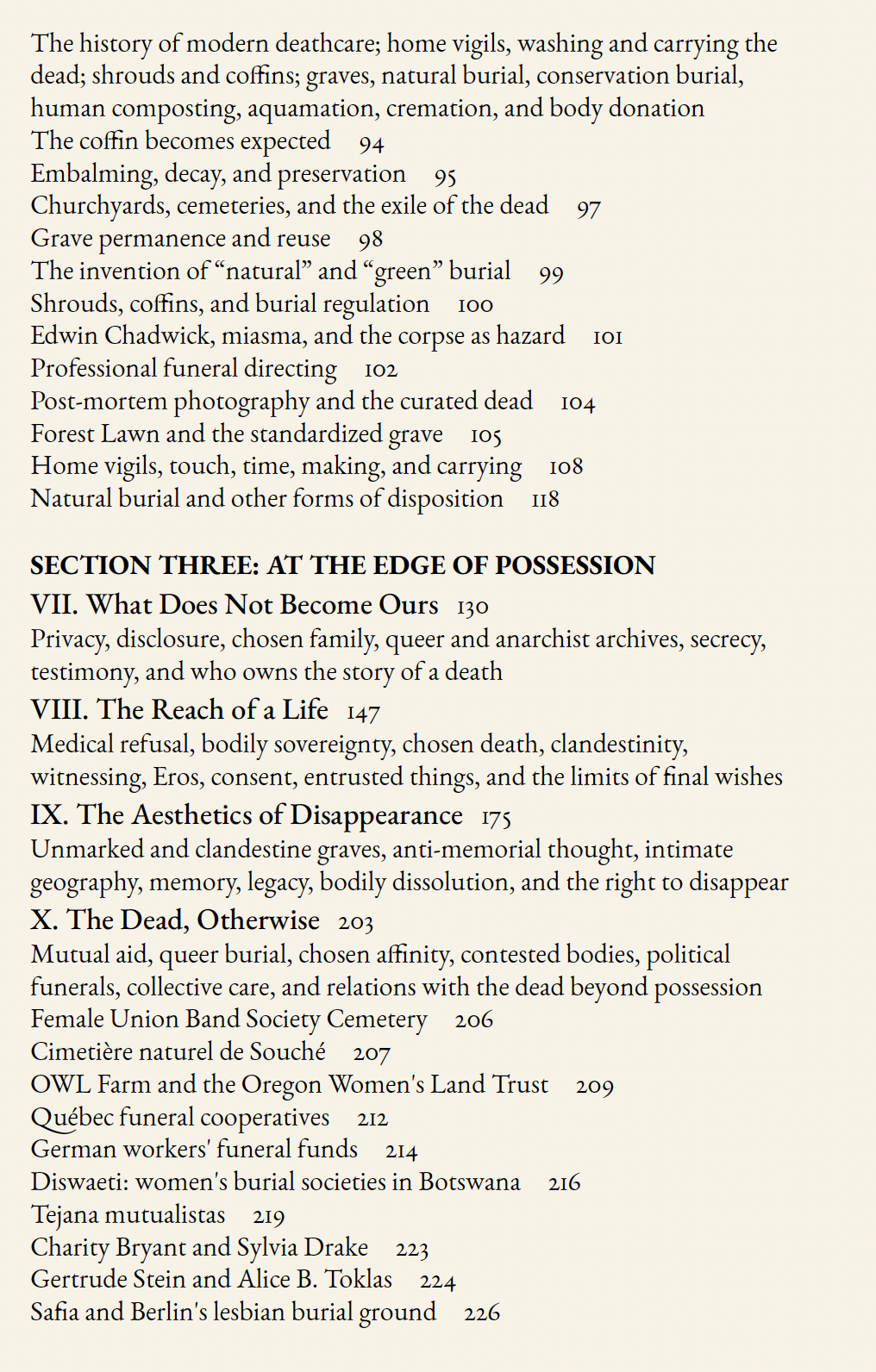 Image 3 of 9
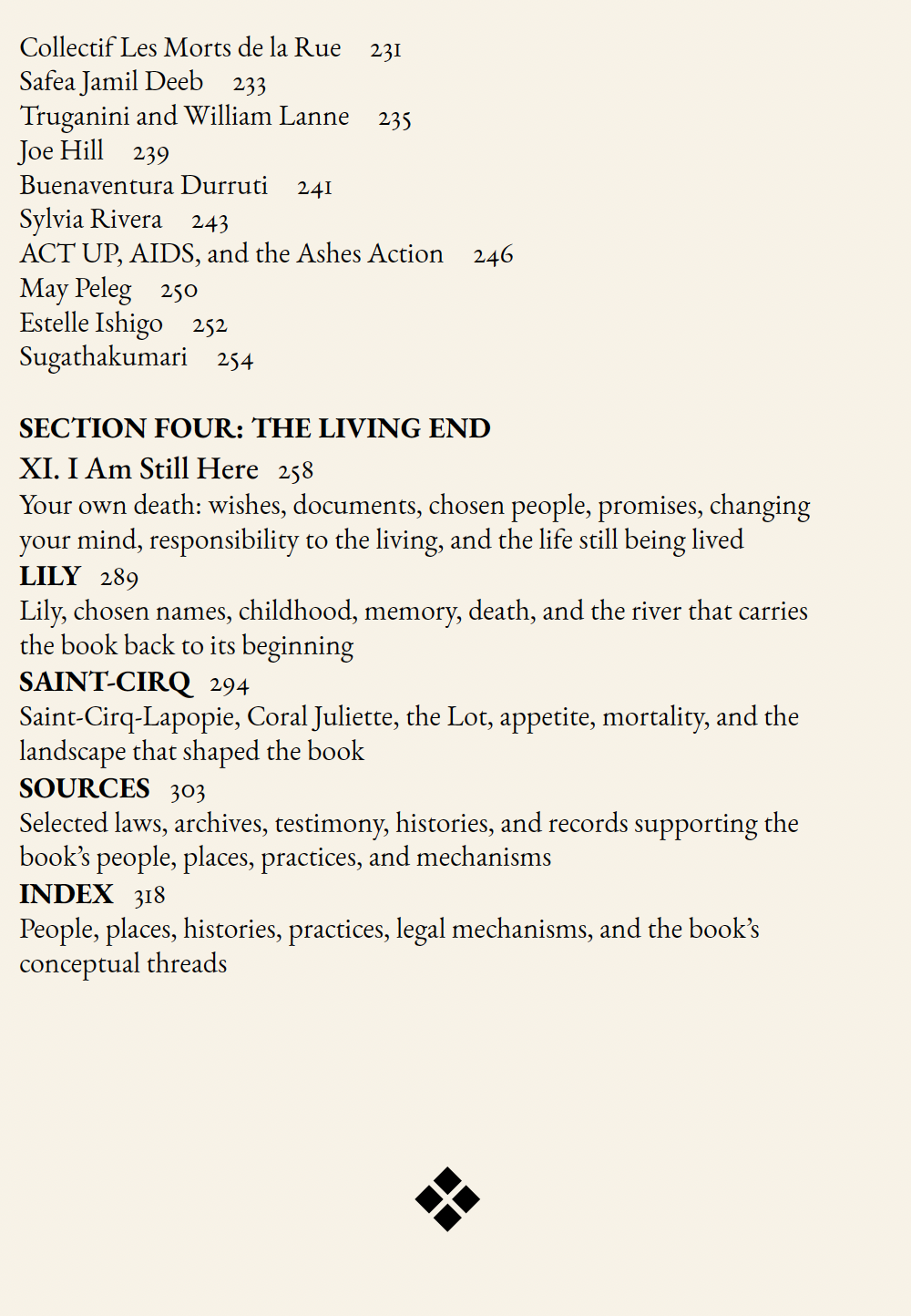 Image 4 of 9
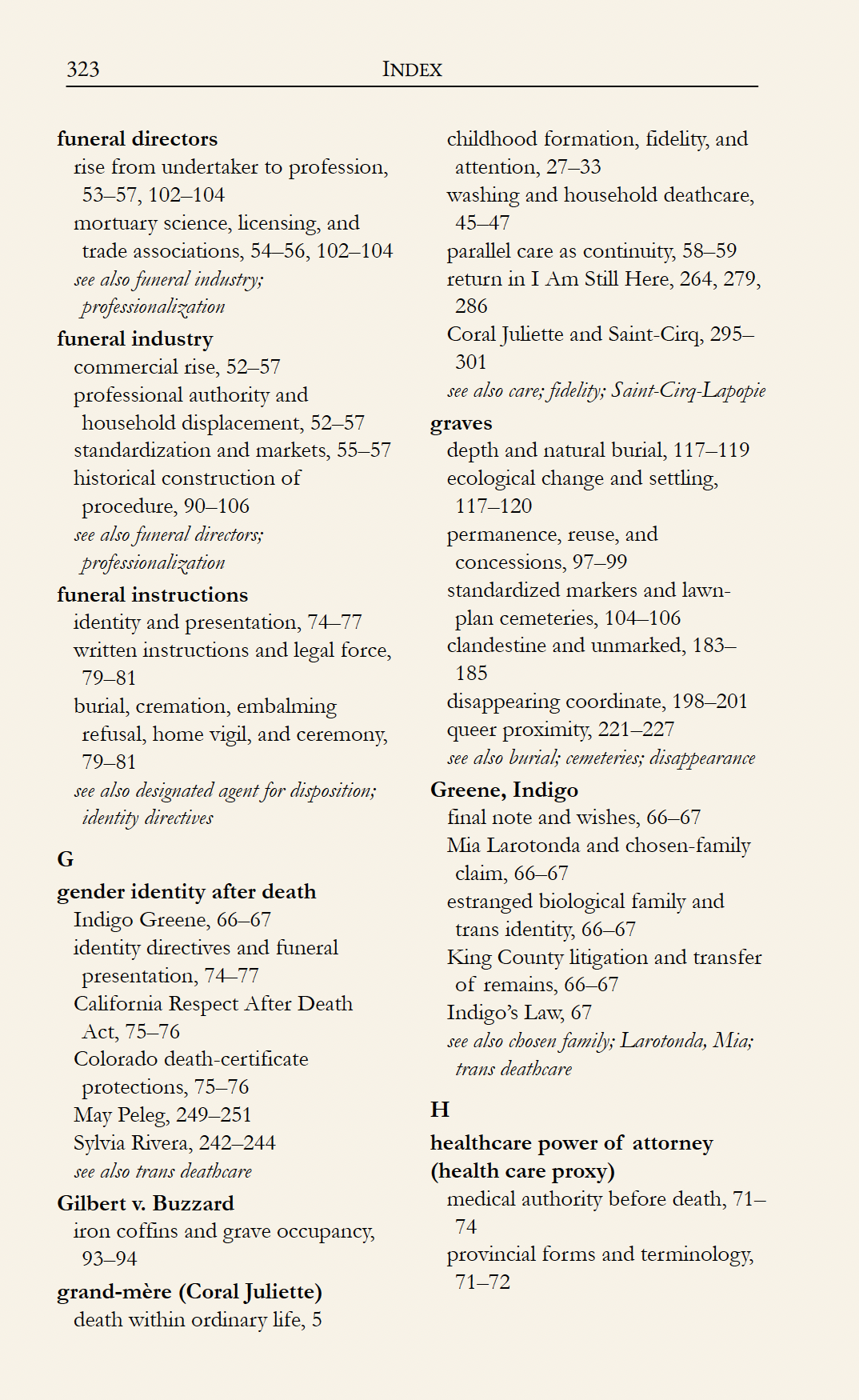 Image 5 of 9
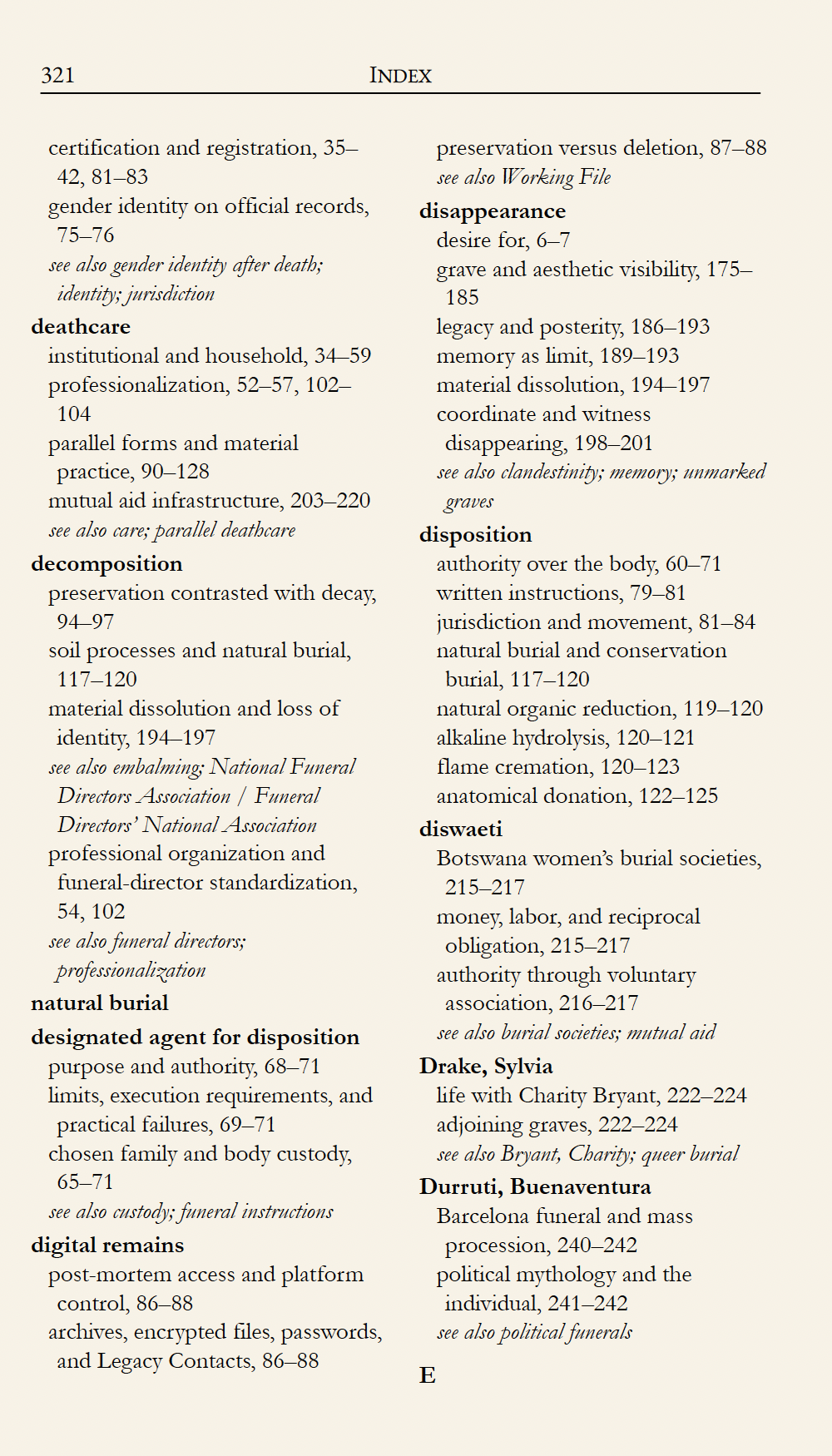 Image 6 of 9
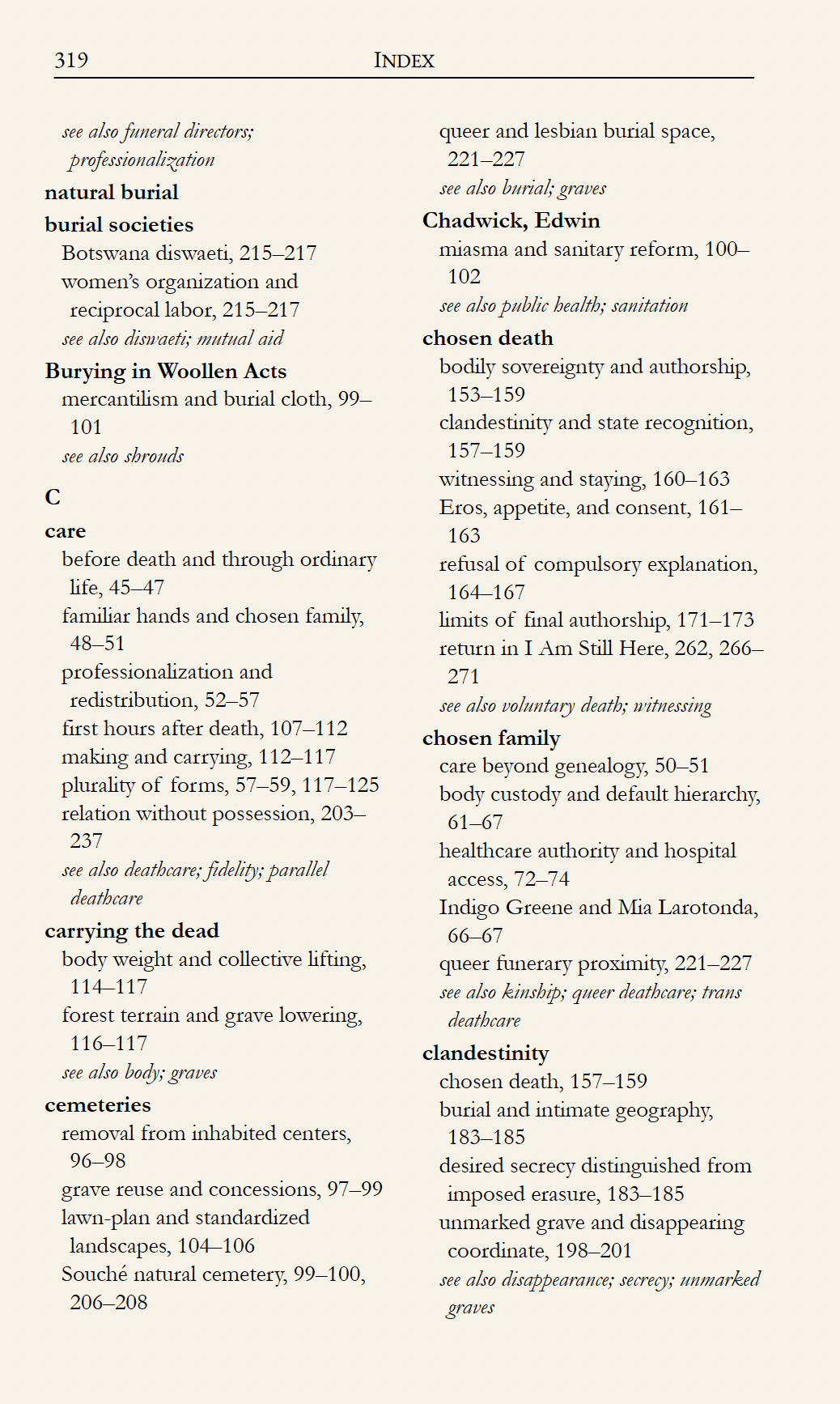 Image 7 of 9
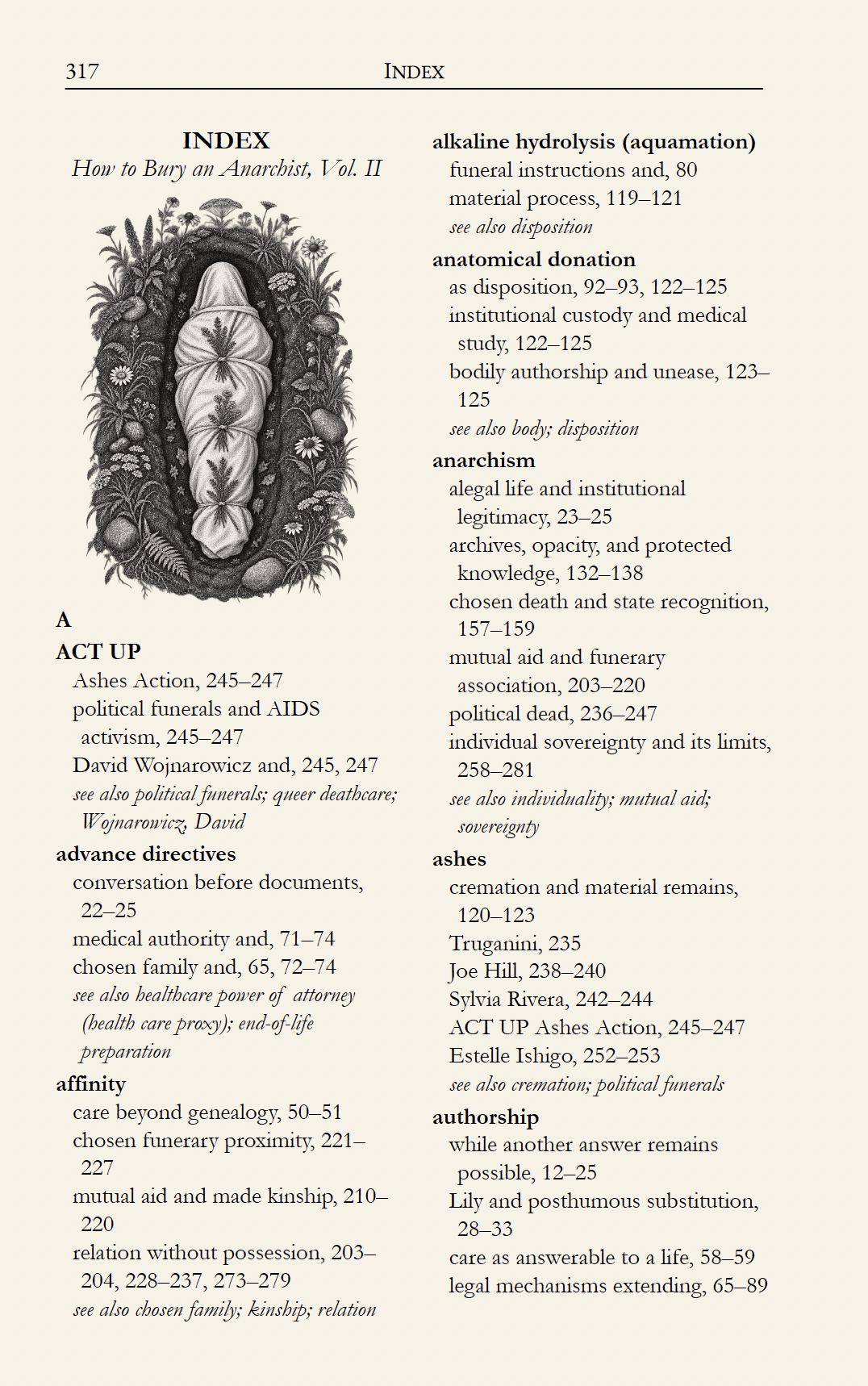 Image 8 of 9
 Image 9 of 9