The Soil Remains Intoxicated — A Cosmology in Ruins
Book II of the series, Dancing in the Backwoods, by Fiona Vivienne, is no green salvation. There is no pastoral return. What ferments here is collapse itself that is lucid, perfumed, and unrepentant. This second cosmology descends from myth into marrow, from masque to compost. Written as an inheritance rather than a theory, it lingers among ruins with elegance, tasting what ferments where civilization rots.
Each gesture is a refusal to restore. Each sentence salts the wreckage. In this terrain, rot becomes ritual and death, a kind of nourishment. The soil thickens with taste, not virtue; with decay, not despair. What remains is not purity but perfume.
This book is a love letter to collapse, intimate, sovereign, and alive.
100 pages.
Digest size.
The Dancing in the Backwoods Series is:
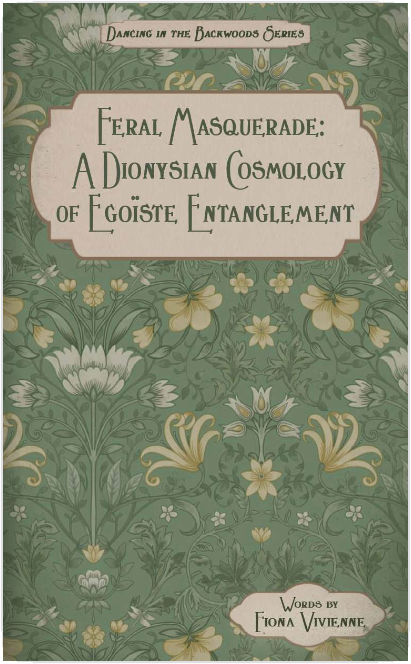
Book I ~ The Feral Masquerade: A Dionysian Cosmology of Egoïste Entanglement: a descent into myth and entanglement.
Book II ~ The Soil Remains Intoxicated: A Cosmology in Ruins,: written from within fertile ruin.
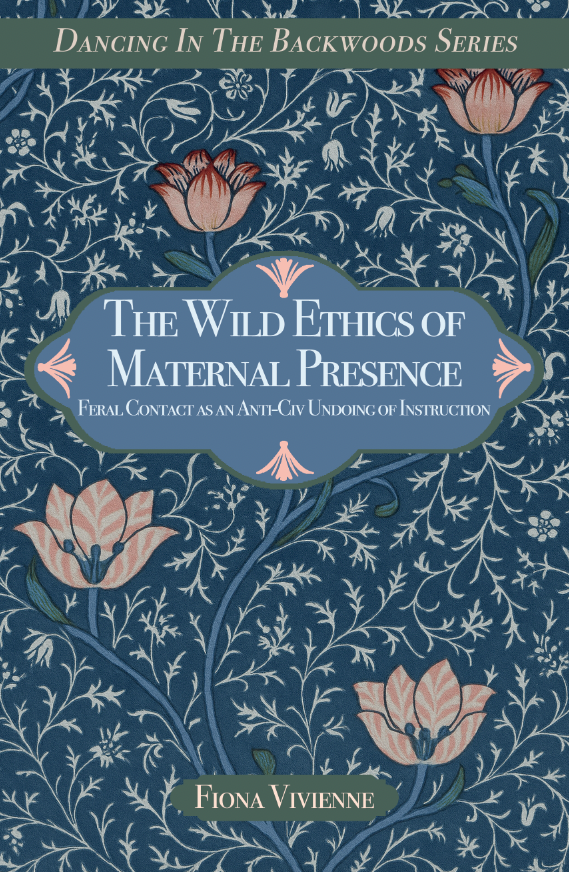
Book III ~ The Wild Ethics of Maternal Presence: on exposure, proximity, and trace.
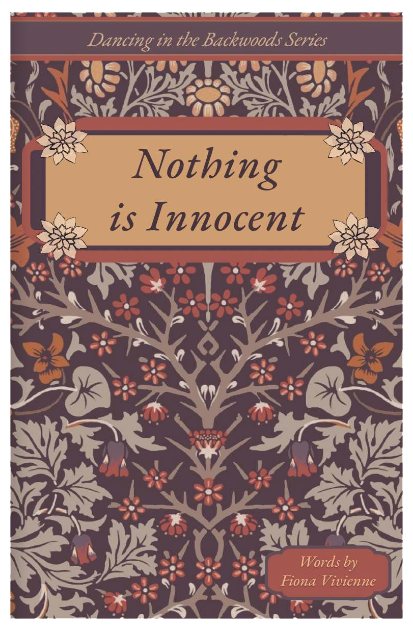
Book IV~ Nothing Is Innocent: a treatise on rot, refusal, and sensory consequence
Book V ~ The Disloyal Animal: on treachery and the refusal to remain legible, with the quiet architectures of domestication exposed.
Book VI ~ No Kingdom Comes: On Blasphemy and the End of Empire: on empire, revelation, and the end of salvation with power and piety unmasked, and dismantled without mercy. L’Empire nu sous ses derniers dieux.
Shipping calculated automatically at checkout according to weight et destination.
View our Shipping & Circulation Information.
REVIEWS
From the journal “Refusé / Correspondences of the Unrepentant”
The Soil Remains Intoxicated feels less like a sequel than a descent; quiet, sovereign, and unsalvageable. Where The Feral Masquerade danced in excess, this one kneels in the rot, caressing what civilization tries to compost out of sight. It abandons the anti-civ tendency’s nostalgia entirely, not to rebuild, but to perfume collapse itself. There is no moral refusal here, only a sensual one. Vivienne writes like someone who has already left the world and now cultivates the ruins as her own garden.
From Lemoine, École des Hautes Études en Philosophie Moderne
This text situates decay as metaphysical ground rather than metaphor. In The Soil Remains Intoxicated, Fiona displays a mature cosmology of refusal—one that no longer gestures toward rebellion but toward a luminous sovereignty in ruin. The writing is not theoretical; it is ontological in its gestures and ritualistic in its eros. It recalls the precision of Blanchot and the severity of early Nietzsche, yet remains distinct in its feminine lucidity. To read it is to taste the end of civilization as an intimate art form.
From: “Insurgent Correspondence”
It is rare to find something in this milieu that does not sound like repetition. So much of what passes for individualism has become rhetoric and selfhood flattened into posture, rebellion recycled as genre. The Soil Remains Intoxicated breaks that pattern entirely. It does not shout its difference; it simply lives elsewhere. The writing moves with an interior authority that has nothing to prove, nothing to defend.
There has been such an absence of feminine presence in the individualist and anti-civ worlds, not for lack of women thinking, but for lack of space that allows for a tone like this: feral, elegant, sovereign without sermon. Fiona writes from that absence and in doing so, undoes it. Her sentences feel cultivated, not composed, as if drawn from a garden tended beyond ideology. For someone long exhausted by the repetition of theory and the spectacle of so-called “revolt,” finding this series is more than relief; it’s recognition. Here is a writer who has no need to reform or redeem anything, only to inhabit the ruins with style and precision. It makes one impatient for what comes next in the Dancing in the Backwoods series, because for once, something essential is being written again.
The Soil Remains Intoxicated — A Cosmology in Ruins
Book II of the series, Dancing in the Backwoods, by Fiona Vivienne, is no green salvation. There is no pastoral return. What ferments here is collapse itself that is lucid, perfumed, and unrepentant. This second cosmology descends from myth into marrow, from masque to compost. Written as an inheritance rather than a theory, it lingers among ruins with elegance, tasting what ferments where civilization rots.
Each gesture is a refusal to restore. Each sentence salts the wreckage. In this terrain, rot becomes ritual and death, a kind of nourishment. The soil thickens with taste, not virtue; with decay, not despair. What remains is not purity but perfume.
This book is a love letter to collapse, intimate, sovereign, and alive.
100 pages.
Digest size.
The Dancing in the Backwoods Series is:
Book I ~ The Feral Masquerade: A Dionysian Cosmology of Egoïste Entanglement: a descent into myth and entanglement.
Book II ~ The Soil Remains Intoxicated: A Cosmology in Ruins,: written from within fertile ruin.
Book III ~ The Wild Ethics of Maternal Presence: on exposure, proximity, and trace.
Book IV~ Nothing Is Innocent: a treatise on rot, refusal, and sensory consequence
Book V ~ The Disloyal Animal: on treachery and the refusal to remain legible, with the quiet architectures of domestication exposed.
Book VI ~ No Kingdom Comes: On Blasphemy and the End of Empire: on empire, revelation, and the end of salvation with power and piety unmasked, and dismantled without mercy. L’Empire nu sous ses derniers dieux.
Shipping calculated automatically at checkout according to weight et destination.
View our Shipping & Circulation Information.
REVIEWS
From the journal “Refusé / Correspondences of the Unrepentant”
The Soil Remains Intoxicated feels less like a sequel than a descent; quiet, sovereign, and unsalvageable. Where The Feral Masquerade danced in excess, this one kneels in the rot, caressing what civilization tries to compost out of sight. It abandons the anti-civ tendency’s nostalgia entirely, not to rebuild, but to perfume collapse itself. There is no moral refusal here, only a sensual one. Vivienne writes like someone who has already left the world and now cultivates the ruins as her own garden.
From Lemoine, École des Hautes Études en Philosophie Moderne
This text situates decay as metaphysical ground rather than metaphor. In The Soil Remains Intoxicated, Fiona displays a mature cosmology of refusal—one that no longer gestures toward rebellion but toward a luminous sovereignty in ruin. The writing is not theoretical; it is ontological in its gestures and ritualistic in its eros. It recalls the precision of Blanchot and the severity of early Nietzsche, yet remains distinct in its feminine lucidity. To read it is to taste the end of civilization as an intimate art form.
From: “Insurgent Correspondence”
It is rare to find something in this milieu that does not sound like repetition. So much of what passes for individualism has become rhetoric and selfhood flattened into posture, rebellion recycled as genre. The Soil Remains Intoxicated breaks that pattern entirely. It does not shout its difference; it simply lives elsewhere. The writing moves with an interior authority that has nothing to prove, nothing to defend.
There has been such an absence of feminine presence in the individualist and anti-civ worlds, not for lack of women thinking, but for lack of space that allows for a tone like this: feral, elegant, sovereign without sermon. Fiona writes from that absence and in doing so, undoes it. Her sentences feel cultivated, not composed, as if drawn from a garden tended beyond ideology. For someone long exhausted by the repetition of theory and the spectacle of so-called “revolt,” finding this series is more than relief; it’s recognition. Here is a writer who has no need to reform or redeem anything, only to inhabit the ruins with style and precision. It makes one impatient for what comes next in the Dancing in the Backwoods series, because for once, something essential is being written again.
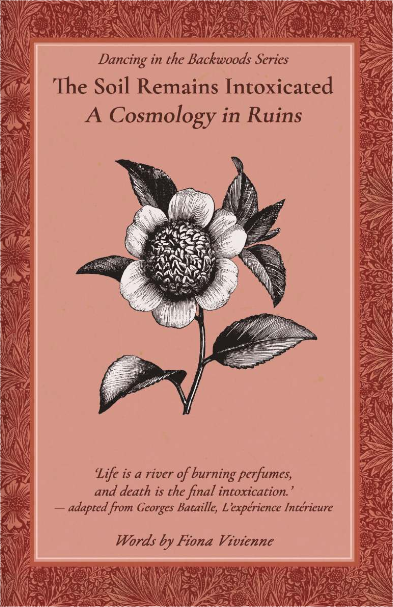 Image 1 of 5
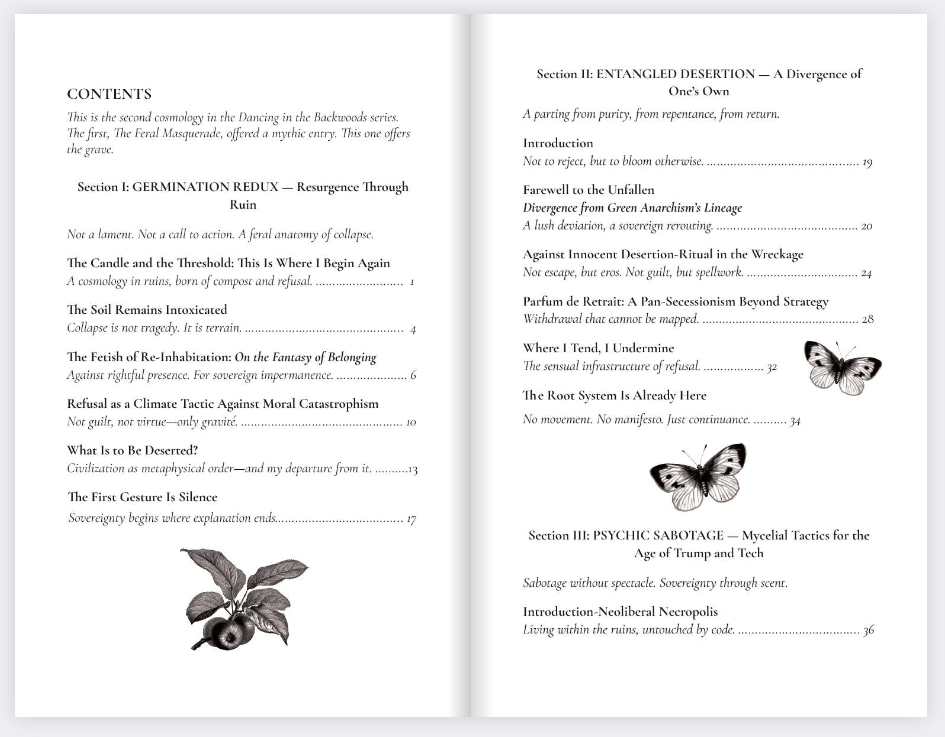 Image 2 of 5
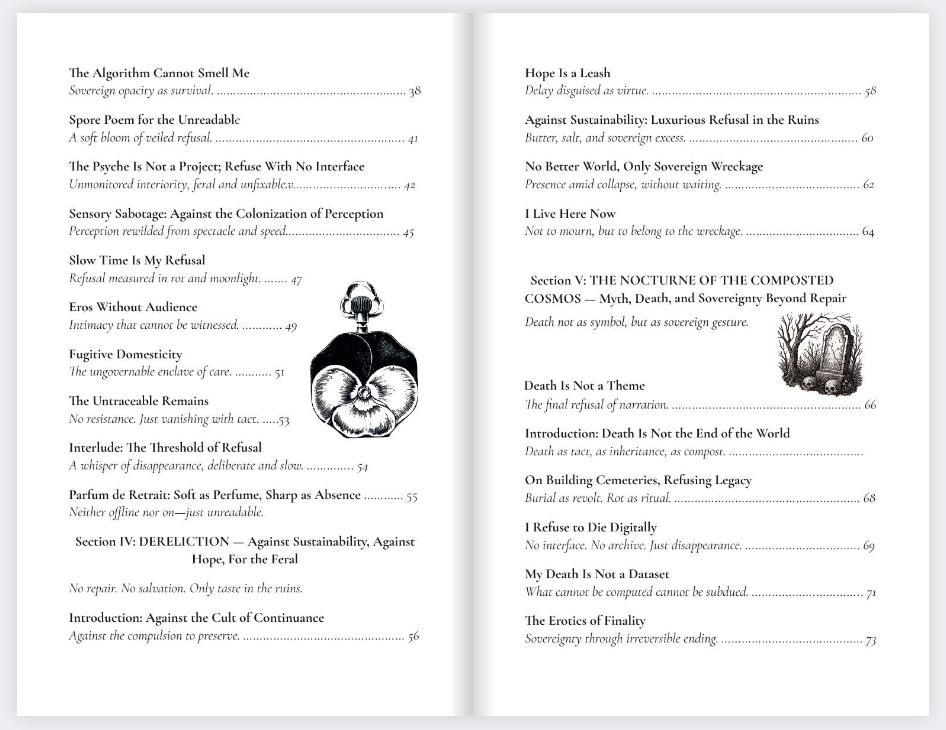 Image 3 of 5
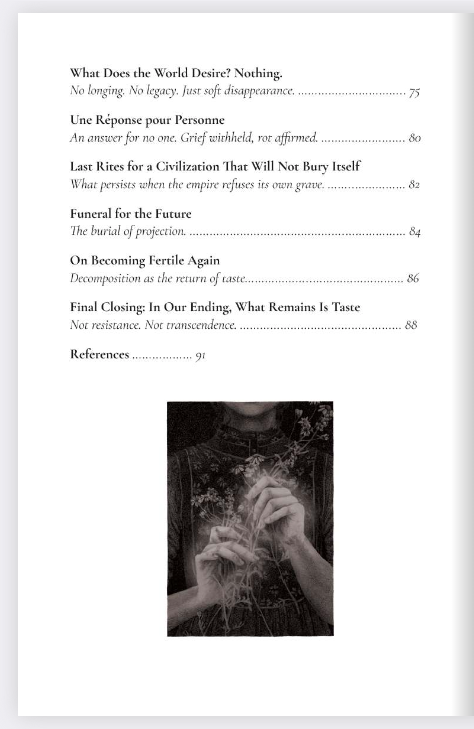 Image 4 of 5
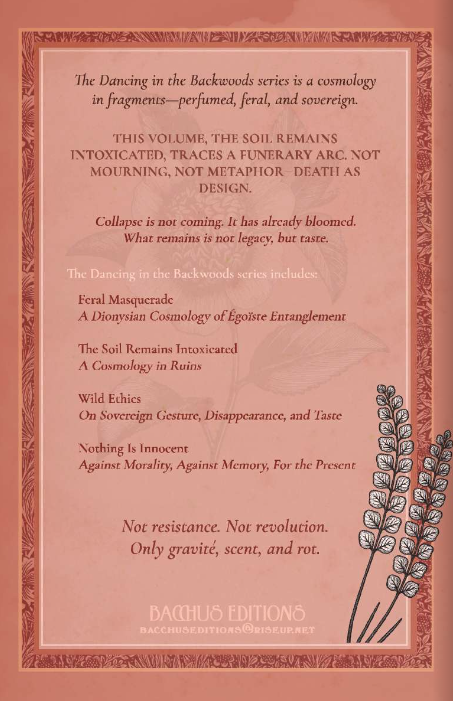 Image 5 of 5