Nothing is Innocent, by Fiona Vivienne.
This third volume of the Dancing in the Backwoods series enters the charged terrain of relation, where touch carries consequence and speech leaves residue. It is not morality, and not its opposite. It is a book written from within discernment itself, where every gesture burns with taste, consequence, and style.
In Nothing is Innocent, ethics sheds its costume of virtue and becomes atmosphere, felt through nearness, recoil, silence, and refusal. The author traces what remains after innocence collapses: tenderness without obligation, care without performance, clarity without plea.
If The Feral Masquerade opened the mythic gate and The Soil Remains Intoxicated lingered in collapse, Nothing Is Innocent is the cut that follows, the flame that refines presence into ethics, eros, and sovereign tact.
A book of living discernment. Une flamme intérieure.
Nothing owed. Nothing explained.
The Dancing in the Backwoods Series is:
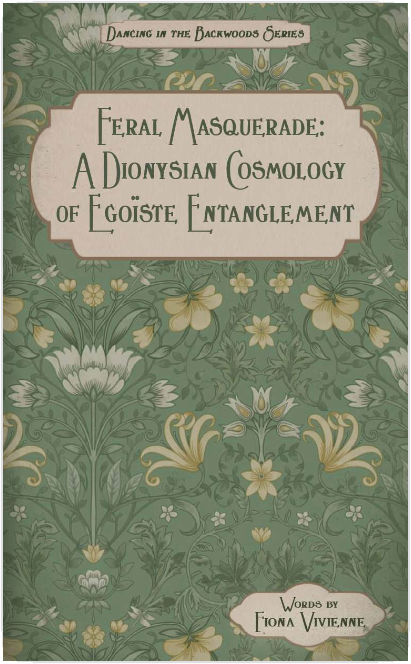
Book I ~ The Feral Masquerade: A Dionysian Cosmology of Egoïste Entanglement: a descent into myth and entanglement.
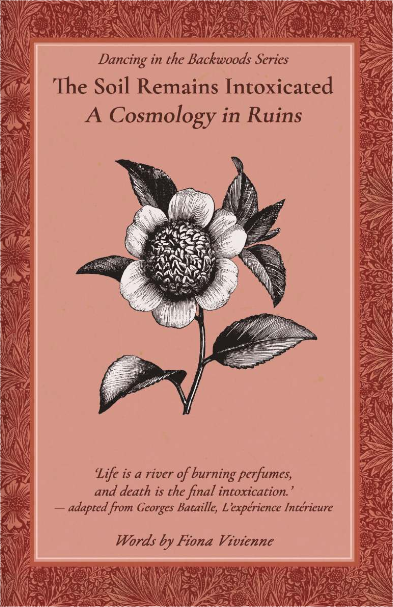
Book II ~ The Soil Remains Intoxicated: A Cosmology in Ruins,: written from within fertile ruin.
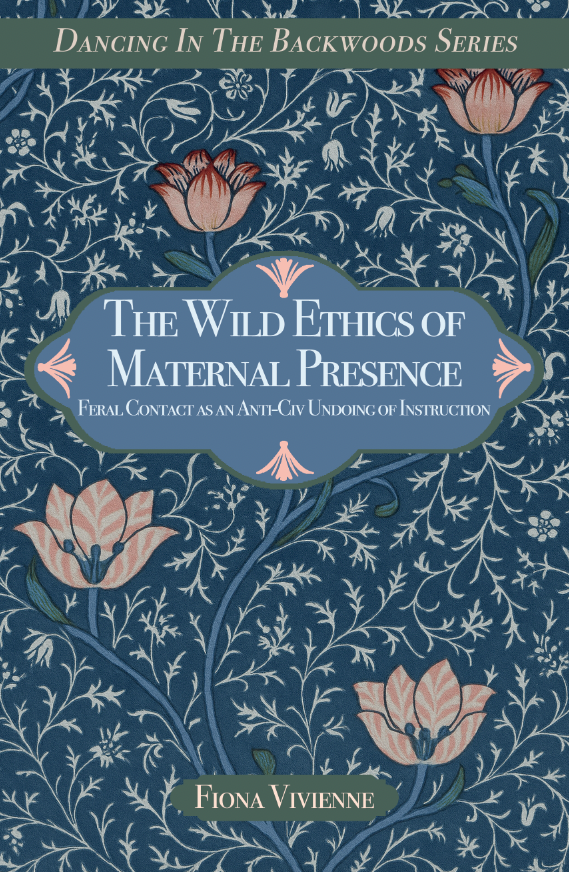
Book III ~ The Wild Ethics of Maternal Presence: on exposure, proximity, and trace.
Book IV~ Nothing Is Innocent: a treatise on rot, refusal, and sensory consequence
Book V ~ The Disloyal Animal: on treachery and the refusal to remain legible, with the quiet architectures of domestication exposed.
Book VI ~ No Kingdom Comes: On Blasphemy and the End of Empire: on empire, revelation, and the end of salvation with power and piety unmasked, and dismantled without mercy. L’Empire nu sous ses derniers dieux.
Shipping calculated automatically at checkout according to weight et destination.
View our Shipping & Circulation Information.
REVIEWS
From “Revue des Flux et Silences,” Paris
This book does not argue, it vibrates. It thickens the air between thought and sensation until meaning condenses like dew. Nothing Is Innocent speaks of ethics the way a river speaks of its banks: by touching them, never by obeying them. There is a clarity here that does not divide, a tact that is neither purity nor guilt, but contact itself.
Fiona writes as if each sentence were an exchange of currents, a mingling of bodies, a philosophy that smells and bleeds. Her ethics of taste, of the chosen burn, makes discourse tremble again. She does not moralize; she conducts. What unfolds is not system but symphony, where refusal is a form of ..almost… hospitality, and sovereignty finds its riot and tenderness. In this book, one hears the secret kinship of chaos and care. Nothing is innocent, indeed, but everything still shimmers with possibility.
From: Correspondances Souterraines
I’ve been reading Distinctively Dionysian for years, always with that strange feeling that someone out there was writing what I’d been trying to live but hadn’t yet put into action or words. Finding Nothing Is Innocent feels like stepping into the hidden room behind it all—the one that had to exist, but no one had found yet. It’s the missing piece of the anti-civ imagination.. It’s not nostalgic, not strategic, it’s just deeply alive. It doesn’t use the usual rebellion-speak. It moves from inside, where choice feels like a heartbeat and ethics hums in the space after touch. Both moralism and relativism are non-existent here; it’s replaced by something that moves more like weather, like scent, like something that can’t be reduced to ideology.
There aren’t many voices like this in our world. It’s sharp, lucid, feminine without imitation, wild without rhetoric. It isn’t another echo of the anarchist canon, either. Reading the author always feels like it’s precisely what that canon has been missing. Reading this reminded me that originality isn’t dead, that writing can still feel like soil and breath and refusal. It made me want to write again but also to live again, this time in the ruins, without apology.
Nothing is Innocent, by Fiona Vivienne.
This third volume of the Dancing in the Backwoods series enters the charged terrain of relation, where touch carries consequence and speech leaves residue. It is not morality, and not its opposite. It is a book written from within discernment itself, where every gesture burns with taste, consequence, and style.
In Nothing is Innocent, ethics sheds its costume of virtue and becomes atmosphere, felt through nearness, recoil, silence, and refusal. The author traces what remains after innocence collapses: tenderness without obligation, care without performance, clarity without plea.
If The Feral Masquerade opened the mythic gate and The Soil Remains Intoxicated lingered in collapse, Nothing Is Innocent is the cut that follows, the flame that refines presence into ethics, eros, and sovereign tact.
A book of living discernment. Une flamme intérieure.
Nothing owed. Nothing explained.
The Dancing in the Backwoods Series is:
Book I ~ The Feral Masquerade: A Dionysian Cosmology of Egoïste Entanglement: a descent into myth and entanglement.
Book II ~ The Soil Remains Intoxicated: A Cosmology in Ruins,: written from within fertile ruin.
Book III ~ The Wild Ethics of Maternal Presence: on exposure, proximity, and trace.
Book IV~ Nothing Is Innocent: a treatise on rot, refusal, and sensory consequence
Book V ~ The Disloyal Animal: on treachery and the refusal to remain legible, with the quiet architectures of domestication exposed.
Book VI ~ No Kingdom Comes: On Blasphemy and the End of Empire: on empire, revelation, and the end of salvation with power and piety unmasked, and dismantled without mercy. L’Empire nu sous ses derniers dieux.
Shipping calculated automatically at checkout according to weight et destination.
View our Shipping & Circulation Information.
REVIEWS
From “Revue des Flux et Silences,” Paris
This book does not argue, it vibrates. It thickens the air between thought and sensation until meaning condenses like dew. Nothing Is Innocent speaks of ethics the way a river speaks of its banks: by touching them, never by obeying them. There is a clarity here that does not divide, a tact that is neither purity nor guilt, but contact itself.
Fiona writes as if each sentence were an exchange of currents, a mingling of bodies, a philosophy that smells and bleeds. Her ethics of taste, of the chosen burn, makes discourse tremble again. She does not moralize; she conducts. What unfolds is not system but symphony, where refusal is a form of ..almost… hospitality, and sovereignty finds its riot and tenderness. In this book, one hears the secret kinship of chaos and care. Nothing is innocent, indeed, but everything still shimmers with possibility.
From: Correspondances Souterraines
I’ve been reading Distinctively Dionysian for years, always with that strange feeling that someone out there was writing what I’d been trying to live but hadn’t yet put into action or words. Finding Nothing Is Innocent feels like stepping into the hidden room behind it all—the one that had to exist, but no one had found yet. It’s the missing piece of the anti-civ imagination.. It’s not nostalgic, not strategic, it’s just deeply alive. It doesn’t use the usual rebellion-speak. It moves from inside, where choice feels like a heartbeat and ethics hums in the space after touch. Both moralism and relativism are non-existent here; it’s replaced by something that moves more like weather, like scent, like something that can’t be reduced to ideology.
There aren’t many voices like this in our world. It’s sharp, lucid, feminine without imitation, wild without rhetoric. It isn’t another echo of the anarchist canon, either. Reading the author always feels like it’s precisely what that canon has been missing. Reading this reminded me that originality isn’t dead, that writing can still feel like soil and breath and refusal. It made me want to write again but also to live again, this time in the ruins, without apology.
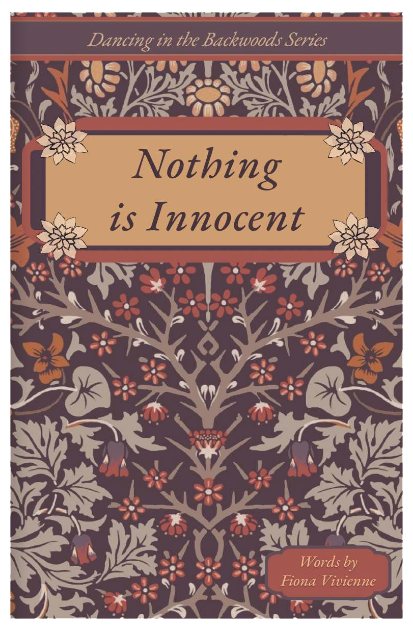 Image 1 of 4
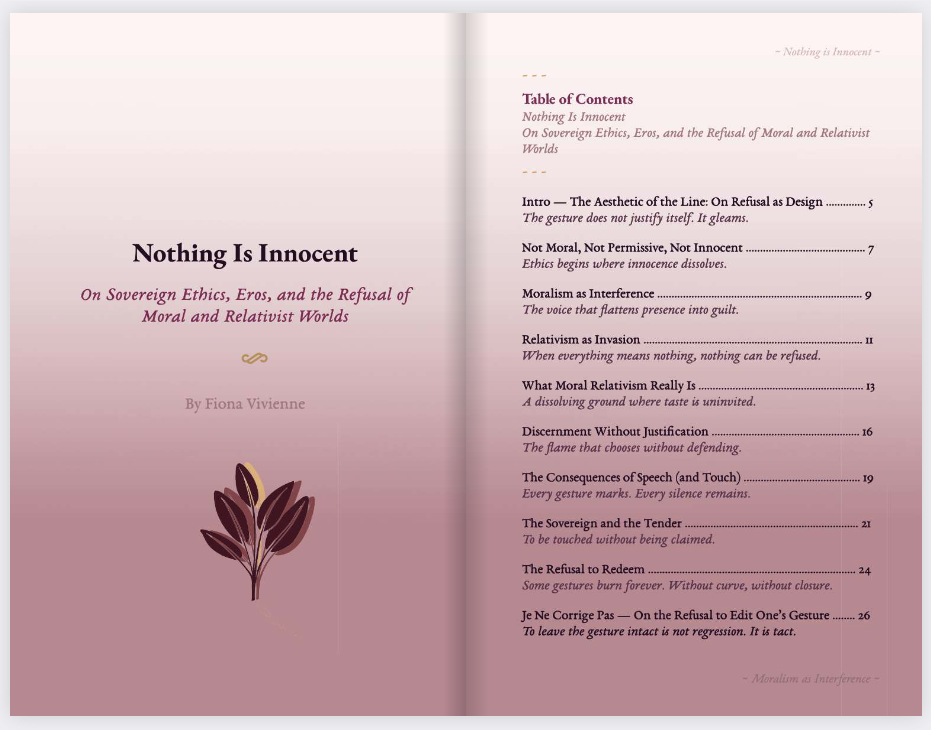 Image 2 of 4
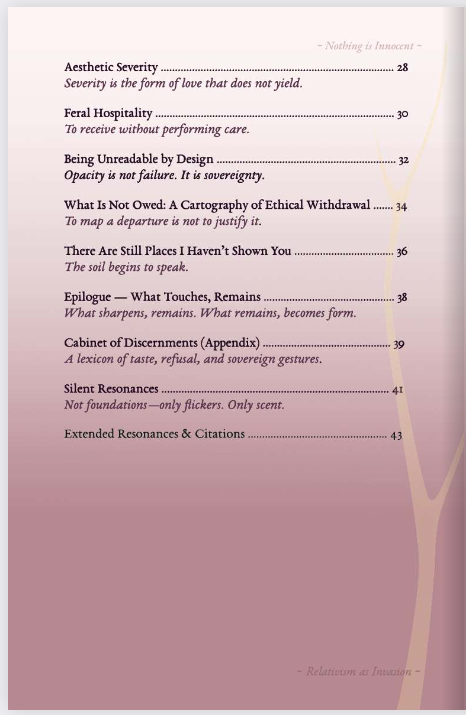 Image 3 of 4
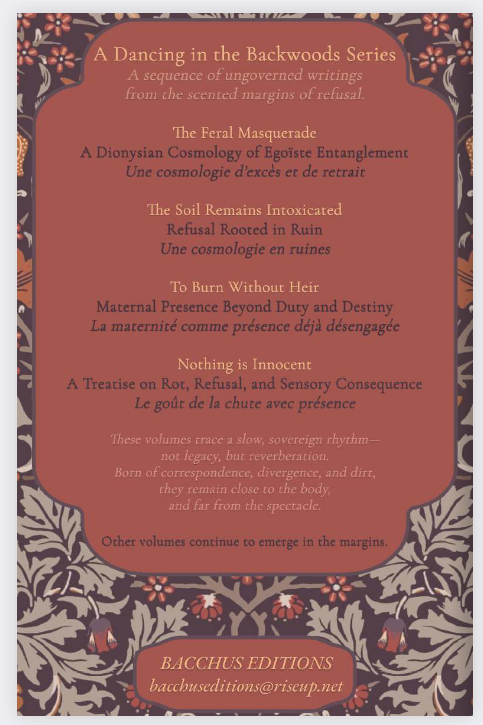 Image 4 of 4