Victor Roudine's Max Stirner Finally Appears in English: The First Critical Edition
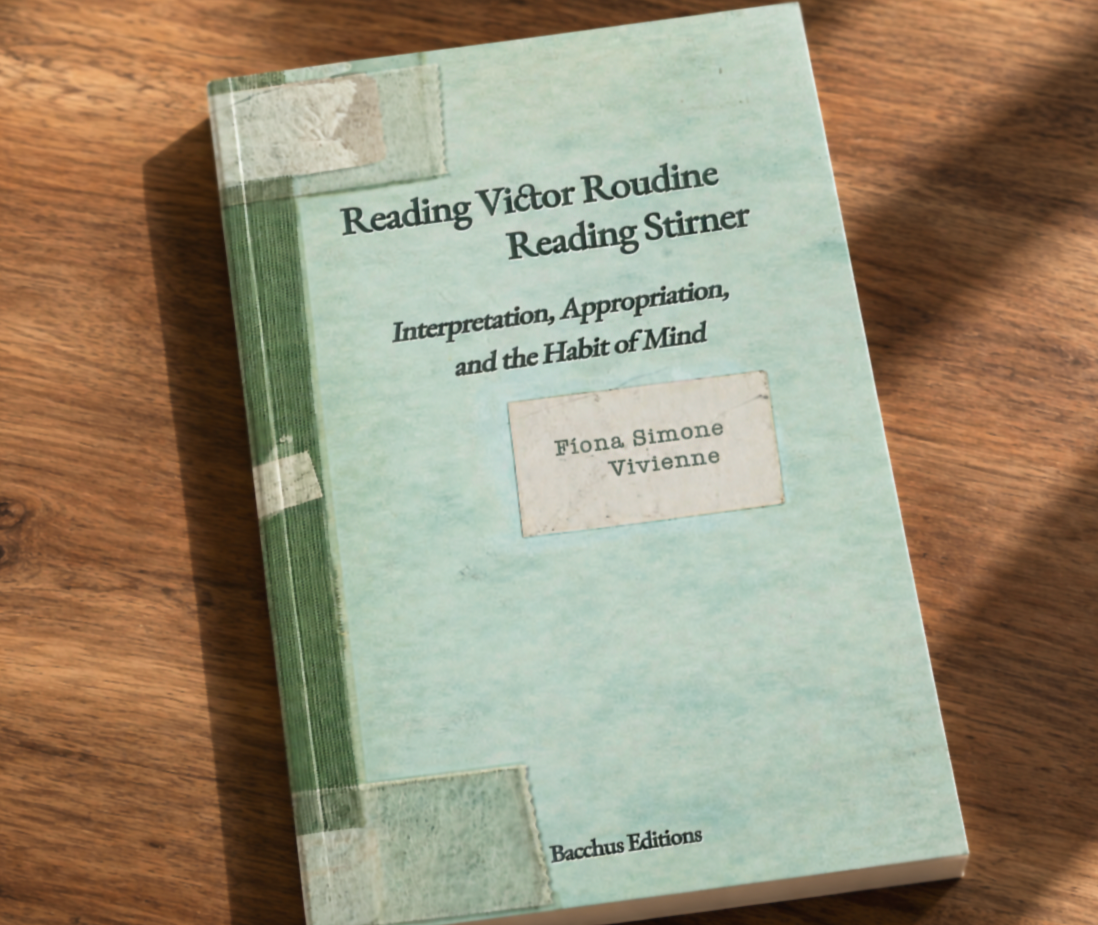
Roudine’s Max Stirner FINALLY appears in English!
Published in Paris in 1910, Victor Roudine's Max Stirner stands among the earliest sustained French studies of Stirner, written from within the French anarchist milieu itself. Issued as Number Thirty-Nine in Henri Fabre's celebrated Portraits d'Hier series, it remained inaccessible to English readers for more than a century. English readers simply could not read Roudine.
That changes this month with the release of Reading Victor Roudine Reading Stirner: Interpretation, Appropriation, and the Habit of Mind
Translated, edited, and introduced by Fíona Vivienne, this first critical English edition reads Roudine from an individualist anarchist perspective, refusing the ideological frameworks that have so often appropriated and recruited Stirner.
In this limited edition, the complete translation appears alongside original editorial essays, historical annotations, archival appendices, editorial notes, and contemporary illustrations, placing both Roudine and Stirner back into the intellectual conversations from which they emerged.
The accompanying writings trace the remarkable habit of mind through which Stirner has so often been appropriated and recruited. Following Victor Roudine, John Henry Mackay, Karl Marx and Friedrich Engels, Émile Armand, Saul Newman, and others as they read Stirner, the book watches generation after generation ask him to become something he consistently refused to become.
More than a century after its original publication, Roudine's study finally enters the English-language conversation. Together, the translation and accompanying editorial work constitute a significant contribution to English-language Stirner scholarship and to the intellectual history of anarchism.
Pre-order your copy through the Bacchus Editions bookshop: HERE
Shipping begins July 17, 2026.