 Image 1 of 1
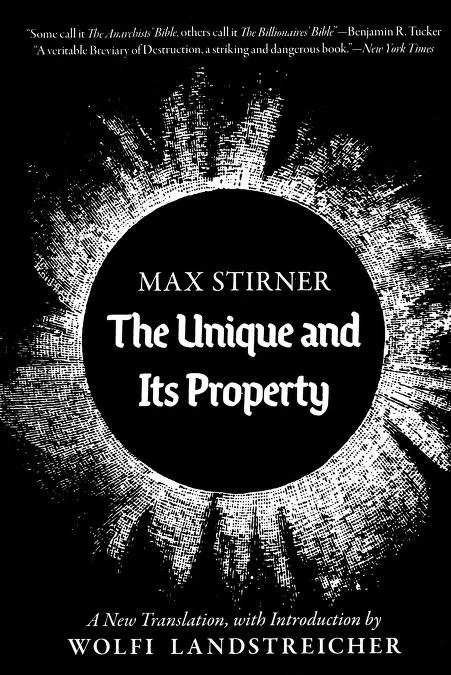
Stirner's The Ego and its Own (1844) is striking in both style and content, attacking Feuerbach, Moses Hess and others to sound the death-knell of Left Hegelianism. The work also constitutes an enduring critique of liberalism and socialism from the perspective of an extreme eccentric individualism. Stirner has latterly been portrayed variously as a precursor of Nietzsche, a forerunner of existentialism, an individualist anarchist, and as manifestly insane.
The Ego and His Own, the seminal defence of individualism, coloured the thinking of Friedrich Nietzsche, Max Ernst, Henrik Ibsen and Victor Serge, among many others, some of whom would vigorously deny any such influence in later years. Less reticent was Marcel Duchamp, who described Max Stirner as the philosopher most important to his work.
Challenging the religious, philosophical and political constraints on personal freedom, Stirner criticizes all doctrines and beliefs that place the interests of God, the state, humanity, society, or any other entity or abstraction over those of the individual. Anticipating the later work of nihilists, existentialists, and anarchists, The Ego and His Own upholds personal autonomy against all that might oppose it.
Contents:
Introduction by Wolfi Landstreicher
I Have Based My Affair on Nothing
1. Humanity
1.1 A Human Life
1.2 Human Beings of Ancient and Modern Times
1.2.1 The Ancients
1.2.2 The Moderns
1.2.2.1 The Spirit
1.2.2.2 The Possessed
1.2.2.2.1 The Phantasm
1.2.2.2.2 Bats in the Belfry
1.2.3 The Hierarchy
1.3 The Free
1.3.1 Political Liberalism
1.3.2 Social Liberalism
1.3.3 Humane Liberalism
1.3.4 Postscript
2. I
2.1 Ownness
2.2. The Owner
2.2.1 My Power
2.2.2 My Intercourse
2.2.3 My Self-Enjoyment
2.3 The Unique
Stirner's The Ego and its Own (1844) is striking in both style and content, attacking Feuerbach, Moses Hess and others to sound the death-knell of Left Hegelianism. The work also constitutes an enduring critique of liberalism and socialism from the perspective of an extreme eccentric individualism. Stirner has latterly been portrayed variously as a precursor of Nietzsche, a forerunner of existentialism, an individualist anarchist, and as manifestly insane.
The Ego and His Own, the seminal defence of individualism, coloured the thinking of Friedrich Nietzsche, Max Ernst, Henrik Ibsen and Victor Serge, among many others, some of whom would vigorously deny any such influence in later years. Less reticent was Marcel Duchamp, who described Max Stirner as the philosopher most important to his work.
Challenging the religious, philosophical and political constraints on personal freedom, Stirner criticizes all doctrines and beliefs that place the interests of God, the state, humanity, society, or any other entity or abstraction over those of the individual. Anticipating the later work of nihilists, existentialists, and anarchists, The Ego and His Own upholds personal autonomy against all that might oppose it.
Contents:
Introduction by Wolfi Landstreicher
I Have Based My Affair on Nothing
1. Humanity
1.1 A Human Life
1.2 Human Beings of Ancient and Modern Times
1.2.1 The Ancients
1.2.2 The Moderns
1.2.2.1 The Spirit
1.2.2.2 The Possessed
1.2.2.2.1 The Phantasm
1.2.2.2.2 Bats in the Belfry
1.2.3 The Hierarchy
1.3 The Free
1.3.1 Political Liberalism
1.3.2 Social Liberalism
1.3.3 Humane Liberalism
1.3.4 Postscript
2. I
2.1 Ownness
2.2. The Owner
2.2.1 My Power
2.2.2 My Intercourse
2.2.3 My Self-Enjoyment
2.3 The Unique