 Image 1 of 1
DIGITAL DOWNLOAD, FREE
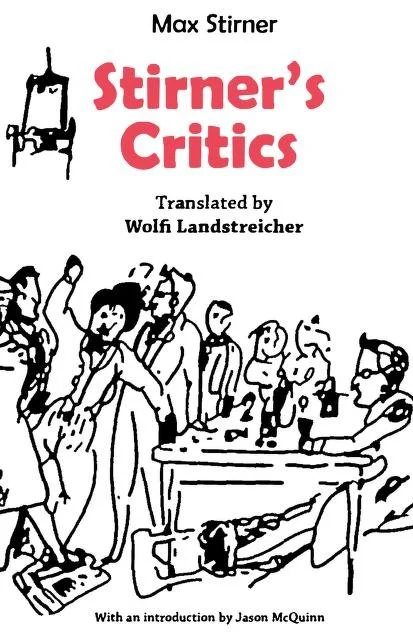
The Egoist Encyclopedia by Wolfi. Landstreicher, Enemy Combatant Publications.
“…Writing an encyclopedia is an ambitious project, arguably expressing more egotism than egoism. But I would never deny being ambitious (and perhaps a bit arrogant as well). Nonetheless, I feel it is necessary to explain what I mean by "encyclopedia". In the 18th century in France, Diderot, along with his friend and occasional intellectual sparring partner D' Alembert, edited one of the most famous encyclopedias of all time. In this work, he explains that this word is made up of the Greek preposition meaning "in" and two Greek words meaning "circle" and "knowledge" ("paedia" more accurately means learning rather than mere factual knowledge, but more on that later). Diderot concluded from this that the word meant "chain of knowledge" and involved gathering together knowledge from around the globe. But I look at this etymology with a bit more whimsy. In ancient Greece (and in other parts of the Mediterranean up to the late Middle Ages), learning and philosophical discourse often took place in gardens, parks or around the streets of cities where there was still only foot traffic while the students and teachers walked around in circles. Sometimes in my more utopian reveries, I imagine a world where learning, discussion and debate can happen in a similar fashion, on long, aimless walks in an environment without the noise and threat of large machines to disturb the flow of ideas, projects and dreams. These strolls, after the manner of the Peripatetics and the Stoics, would be the "circles of learning" that encyclopedias would record.
Well, Portland is a modern city. The traffic, the noise, the lack of adequate space limits the possibility for pursuing discussions of more than two or three people in this manner, and even these small discussions are usually burdened with the need to watch for the potentially deadly traffic. So such encyclopedic endeavors mostly exist only in a metaphorical sense. Nonetheless, if I gather most of my knowledge from books, it is the discussions I have in my circles of friends and acquaintance, or among strangers I encounter in my circumambulations around this town and around the world, that provide me with the capacity for critical thinking that turns this knowledge from mere facts to real learning. Thus, the "circle of learning" remains the source for my ideas, thoughts and reveries….”
DIGITAL DOWNLOAD, FREE
The Egoist Encyclopedia by Wolfi. Landstreicher, Enemy Combatant Publications.
“…Writing an encyclopedia is an ambitious project, arguably expressing more egotism than egoism. But I would never deny being ambitious (and perhaps a bit arrogant as well). Nonetheless, I feel it is necessary to explain what I mean by "encyclopedia". In the 18th century in France, Diderot, along with his friend and occasional intellectual sparring partner D' Alembert, edited one of the most famous encyclopedias of all time. In this work, he explains that this word is made up of the Greek preposition meaning "in" and two Greek words meaning "circle" and "knowledge" ("paedia" more accurately means learning rather than mere factual knowledge, but more on that later). Diderot concluded from this that the word meant "chain of knowledge" and involved gathering together knowledge from around the globe. But I look at this etymology with a bit more whimsy. In ancient Greece (and in other parts of the Mediterranean up to the late Middle Ages), learning and philosophical discourse often took place in gardens, parks or around the streets of cities where there was still only foot traffic while the students and teachers walked around in circles. Sometimes in my more utopian reveries, I imagine a world where learning, discussion and debate can happen in a similar fashion, on long, aimless walks in an environment without the noise and threat of large machines to disturb the flow of ideas, projects and dreams. These strolls, after the manner of the Peripatetics and the Stoics, would be the "circles of learning" that encyclopedias would record.
Well, Portland is a modern city. The traffic, the noise, the lack of adequate space limits the possibility for pursuing discussions of more than two or three people in this manner, and even these small discussions are usually burdened with the need to watch for the potentially deadly traffic. So such encyclopedic endeavors mostly exist only in a metaphorical sense. Nonetheless, if I gather most of my knowledge from books, it is the discussions I have in my circles of friends and acquaintance, or among strangers I encounter in my circumambulations around this town and around the world, that provide me with the capacity for critical thinking that turns this knowledge from mere facts to real learning. Thus, the "circle of learning" remains the source for my ideas, thoughts and reveries….”