In Production now: How To Bury An Anarchist Vol. II, In Detail
How to Bury an Anarchist Vol II, Édition Révisée now in production through Bacchus Editions…
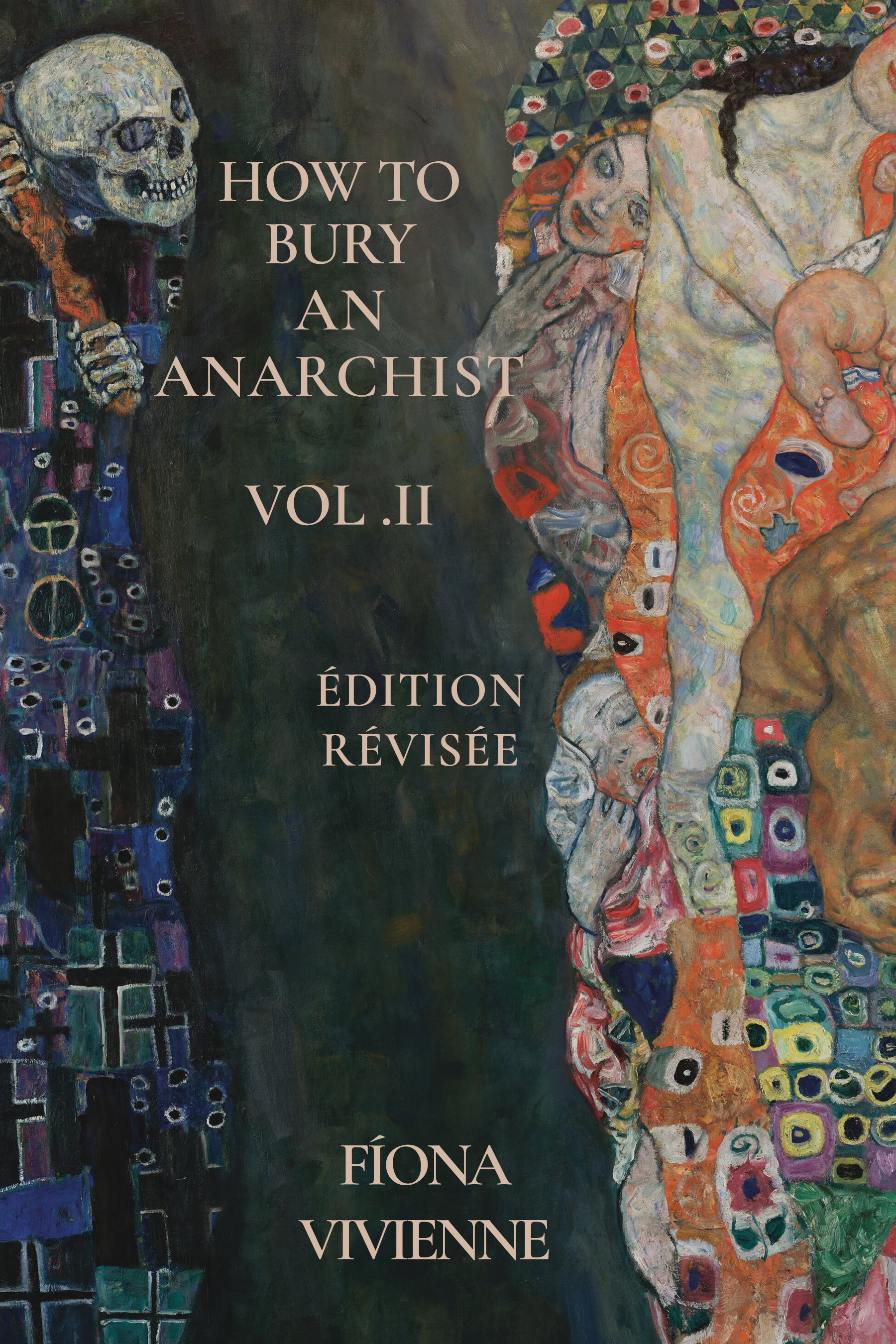
How To Bury An Anarchist, Vol II.
The first volume of How To Bury an Anarchist appeared in a zine style format, and had a small private run, disappearing quickly into personal collections. This revised edition expands the project substantially in size and scope, and will receive a much larger print run. For those who have been waiting for this book, the new volume moves much deeper into the practical, emotional, philosophical, et (a)legal terrain surrounding death outside institutional management.
The book is organized across nine major sections and explores subjects including:
(a)legal end-of-life arrangements and parallel funerary sovereignty
chosen death and personal authorship over one’s ending
body custody disputes, institutional conflict, et the unstable terrain between legality and legitimacy
clandestine and unmarked burials, forest burial traditions, and burial without inscription
queer and trans end-of-life vulnerability, chosen-family protections, and refusal of inherited authority
informal mourning networks, clandestine care, and anti-institutional death practices
entrusted death plans, letters, fragments, et partial instructions left before departure
the practical realities of tending, carrying, preparing, and protecting the dead outside conventional funeral systems
opacity, disappearance, anti-memorial thought, et the refusal of full institutional visibility
practical end-of-life documents, funeral authorizations, medical power of attorney, burial wishes, witness structures, and hospital advocacy outside normative family systems
philosophical writings on eros, sovereignty, ritual refusal, anonymity, disappearance, et the managed end
Several sections focus directly on the physical and logistical realities surrounding death outside institutional care. The volume discusses carrying and tending the dead, unrecorded burial practices, timing, concealment, chosen witnesses, informal body care, and the difficult situations that emerge when personal wishes conflict with legal structures, institutional authority, or inherited family power.
Other portions of the book gather letters, fragments, written intentions, partial instructions, and reflections surrounding chosen death, including the emotional and philosophical terrain left behind afterward. These writings move deliberately away from therapeutic language and toward questions of authorship, affinity, opacity, privacy, bodily sovereignty, et the refusal to surrender the final gesture entirely to institutional handling.
The revised edition also includes an extensive back section gathering end-of-life documents, death planning materials, and independently assembled forms and packets developed through years of direct funerary and burial experience.
Rather than generic institutional paperwork, these materials were selected and organized specifically around questions of bodily autonomy, chosen witnesses, practical preparation, funeral authorization, burial wishes, partner protections, medical power of attorney, hospital advocacy, and personal control over one’s final arrangements. Readers will also find curated resource links, references, and pathways for further exploration into home funerals, alternative burial practices, queer and chosen-family protections, and autonomous death planning outside conventional funeral industry structures.
At its center, the book asks what it means for a singular life to remain singular at the threshold of death.
Modern society assumes continuity of ownership over the body. It assumes that death must pass through official channels, approved witnesses, managed grief, documented procedures, permanent inscription, et institutional interpretation. This volume moves through those assumptions carefully, examining the many ways individuals and small circles have attempted to reclaim intimacy, secrecy, disappearance, and direct participation in death from systems designed to absorb it.
A substantial portion of the work also confronts the difficult and controversial terrain of chosen death directly.
Not through therapeutic discourse, moral condemnation, or romantic spectacle, but through questions of refusal, opacity, authorship, bodily sovereignty, et the right of singular lives to remain singular even at the threshold of ending. The book examines how people prepare for death privately, how intentions are entrusted or withheld, how final wishes become contested, and how certain forms of disappearance resist institutional interpretation entirely.
There is also a significant section devoted to the unstable terrain where bodily sovereignty, clandestine care, personal legitimacy, et institutional authority cease to align. Questions of sovereignty appear here in material form: who carries the body, who has legal authority over it, what paperwork matters, how burial wishes are protected or ignored, how chosen witnesses navigate hospitals, coroners, funeral homes, transport, custody disputes, and the unstable threshold between personal intention and state procedure.
Several essays move directly through the tensions between legality and legitimacy, especially in situations where chosen kinships, entrusted wishes, clandestine care, or personal autonomy stand in conflict with institutional authority. The book does not attempt to resolve these tensions into activist language, therapeutic reassurance, or legal certainty. It remains inside them.
Throughout the volume runs the conviction that death does not erase individuality. If anything, it reveals how deeply a life either belonged to itself or was surrendered piece by piece long before the end arrived.
This is neither manifesto nor operational manual. It remains a counter-institutional death archive, an outlaw ethnography of mourning and disappearance, a philosophical work on opacity and the managed end, and a funerary atlas for those who have never fully trusted institutional death care to hold the final gesture with tenderness.
To bury without permission is sometimes illegal. So are many forms of disappearance, secrecy, bodily autonomy, et unauthorized care once institutional authority loses its monopoly over the dead. The book neither romanticizes nor resolves these tensions. It remains inside them.
──── ✧ ────
This is one of the largest and most ambitious books Bacchus Editions has produced so far, and easily the most extensive work yet in the How to Bury an Anarchist series. More previews, excerpts, production photographs, and interior pages will appear as printing progresses.
How to Bury an Anarchist, Vol. II — Édition Révisée, Bacchus Editions, available July 2026.