Translating
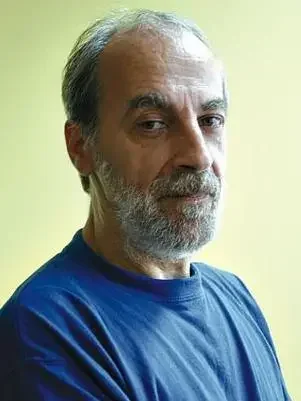
Alfredo M. Bonanno
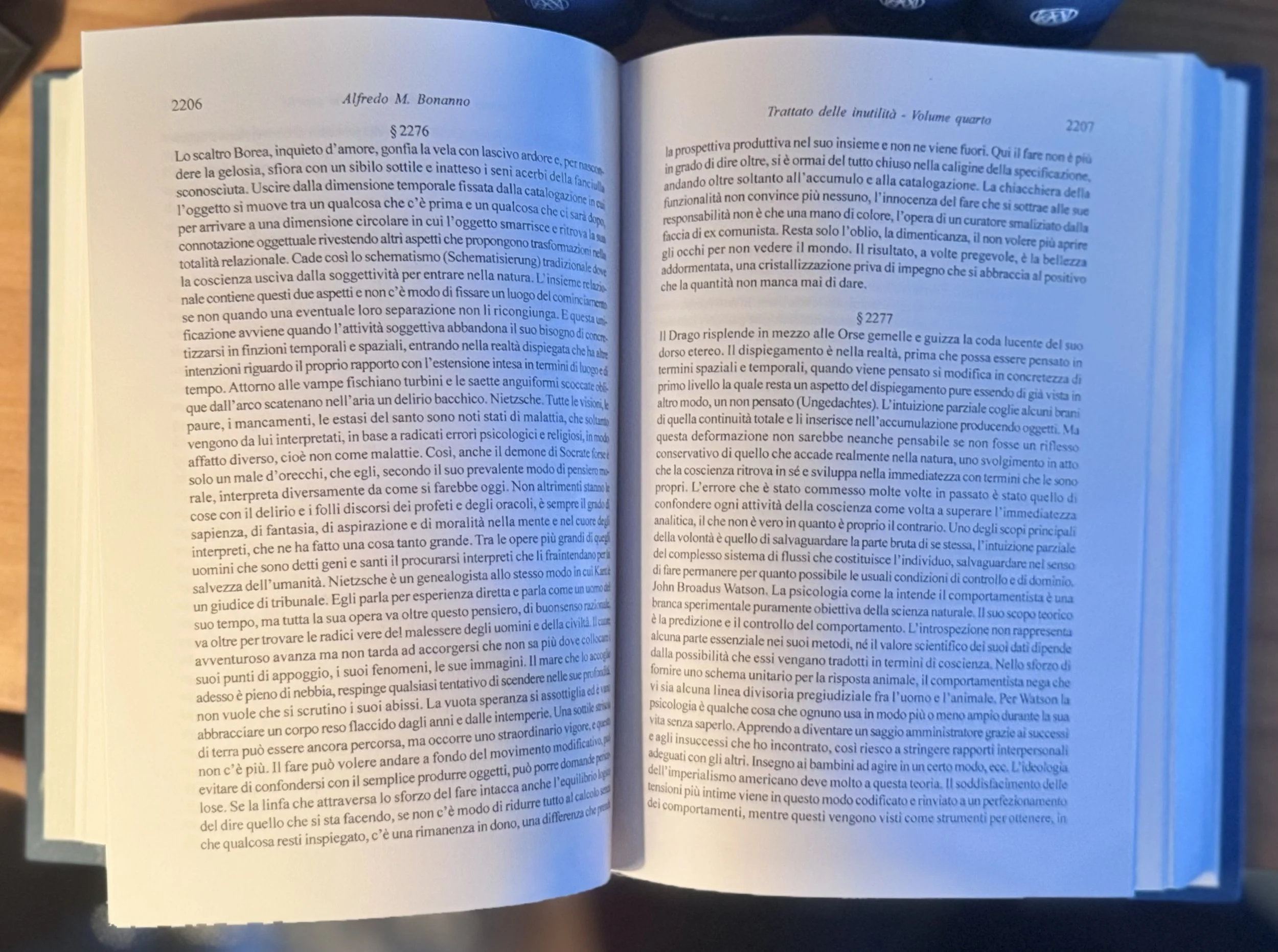
Trattato delle Inutilità. Parte prima: Jamais (Treatise on Uselessness. Part One: Never), and Hybris. Distruggere la religione (Hybris. Destroy Religion) are not singular books but extended terrains. These writings unfold over time, returning, circling, pressing their thought further rather than allowing it to rest.
Bonanno writes from within insurrectionary tension, where critique does not stand apart from life, and thought never settles into system. His language moves through analysis, rupture, and reflection without seeking coherence as an end. There is no interest in doctrine, no attempt to construct a stable framework. What persists instead is a continuous pressure against form, against closure, against the expectation that thought and action should resolve into something usable.
The scale of these writings is not incidental. It reflects a way of thinking that returns again and again, approaching the same fractures from shifting positions. His thought moves toward conclusion but remains in motion, reopening what has already been said, insisting on it without repetition. This is not easy work. He is exacting in it. To remain with Bonanno’s writing is to stay inside that movement, where what emerges is not a theory to be applied but a field of tension that continues to unsettle itself. Questions reopen rather than resolve. Structures are approached only to be loosened or, at times, broken apart. Moments of clarity carry within them a refusal to stabilize into anything final.
This movement carries directly into the work of translation. Italian allows Bonanno a density that is both compressed and fluid, capable of holding force without explanation. His sentences move with a particular cadence, tightening, accelerating, expanding. This resists the pacing expected of English or French, both of which tend to ask for structure, for decision, for a clarity that risks redistributing the pressure of the original.
The work, then, becomes one of preservation rather than correction. Of holding the line of his movement within another language without smoothing its edges. Of carrying its weight without rendering it more accessible than it was ever meant to be.
Translating Bonanno, or Novatore, or Filippi, cannot be approached from a distance. It requires a familiarity not only with the texts but with the conditions from which they emerge… the tensions, the refusals, the lived ground that gives the language its tone. There is no separation here between the voice and the life behind it, and to translate one is already to be entangled with the other.
These translations move slowly, not just because they’re enormous tomes, and not as a method but as a necessity. Each passage is returned to, re-entered, and carried across with attention to cadence, pressure, refusal, and his life. There is an intensity in this process that’s off the charts. Knowing and missing him makes it all the more important to us.
In time, this page will share fragments and chapters from the books, as Fiona continues to translate them.
✶ · · ☾ · · ✶